What to Do in the First 24 Hours After Water Damage
When water damage strikes your home or business, every minute counts. The first 24 hours are the most critical window for limiting damage, preventing mold, and protecting your insurance claim. At Premier Restoration Group, we respond to water emergencies across South Florida 24 hours a day, 7 days a week, and we have seen firsthand the difference between quick action and delayed action.
Here is exactly what you should do the moment water damage occurs.
1. Shut Off the Water Source
If the damage is caused by a burst pipe, leaking appliance, or overflowing fixture, locate your main water shut-off valve and turn it off immediately. Stopping the source prevents additional water from entering your home. If you cannot locate the shut-off or the source is outside your control (such as a storm), focus on the next steps.
2. Turn Off Electricity in Affected Areas
Water and electricity are a dangerous combination. Before entering a flooded room, switch off the circuit breakers for any areas that have standing water. Do not enter a flooded space if electrical outlets, panels, or appliances are submerged until a professional gives the all-clear.
3. Document Everything Before Touching Anything
Take photos and videos of all damage before moving furniture, removing water, or making any repairs. Capture wide shots of each room, close-ups of damaged materials, and images of the water source. This documentation is critical for your insurance claim and is something your adjuster will specifically request.
4. Remove Standing Water If It Is Safe to Do So
If it is safe, begin removing standing water using mops, towels, or a wet/dry vacuum. The faster water is removed, the less time it has to soak into flooring, subfloor, drywall, and insulation. Do not use a standard household vacuum for water removal; only a wet/dry vac is safe.
5. Move Valuables and Furniture to a Dry Area
Lift furniture off wet flooring by placing aluminum foil or wood blocks under the legs. Remove rugs, artwork, electronics, and important documents from the affected area. Wet materials left in place will continue to absorb moisture, further compounding the damage.
6. Increase Air Circulation
Open windows and doors if the weather permits. Turn on fans and your air conditioning system to begin drying the space. However, be aware that fans alone are rarely sufficient for thorough drying; professional equipment is needed to dry wall cavities and subfloors.
7. Call a Professional Restoration Company
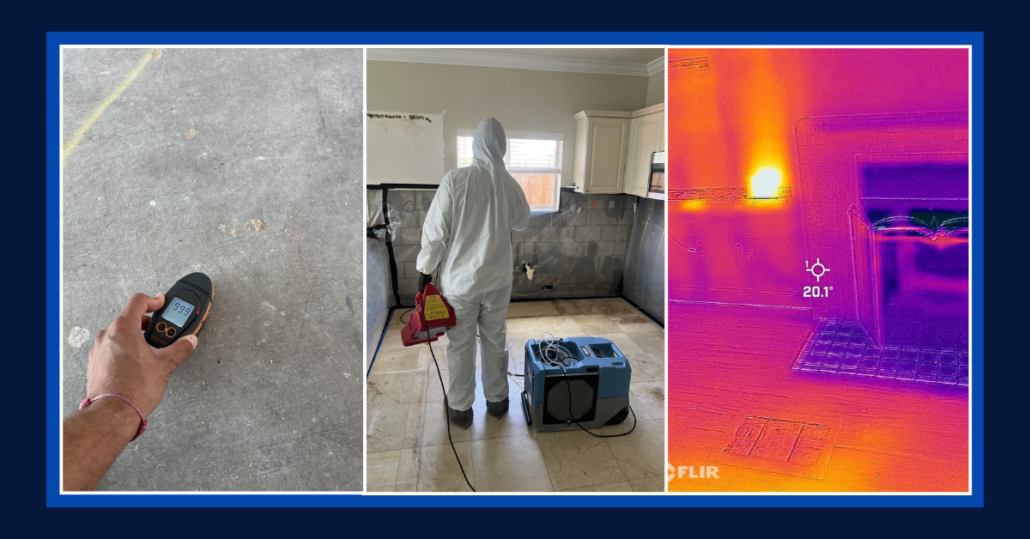
This is the most important step. Professional restoration companies like Premier Restoration Group have industrial dehumidifiers, water extractors, and moisture meters that detect hidden water behind walls and under floors. We can begin drying within hours of your call and document everything needed for your insurance claim.
8. Call Your Insurance Company
Once the immediate threat is controlled and you have documentation, contact your insurance company to report the damage and begin your claim. If you call PRG first, we can help you document the damage properly before the adjuster arrives, which often leads to faster, more complete claim approvals.
Why the First 24 Hours Matter So Much
Mold begins to grow in as little as 24 to 48 hours after water exposure. Structural materials like drywall, insulation, and wood framing absorb water quickly and can begin to deteriorate or grow mold before damage is visible to the naked eye. Acting fast reduces repair costs, protects your health, and strengthens your insurance claim.
Ready to protect your home or business? Premier Restoration Group is available 24/7 for emergency response and free inspections.
📞 Call us at (786) 876-6557